
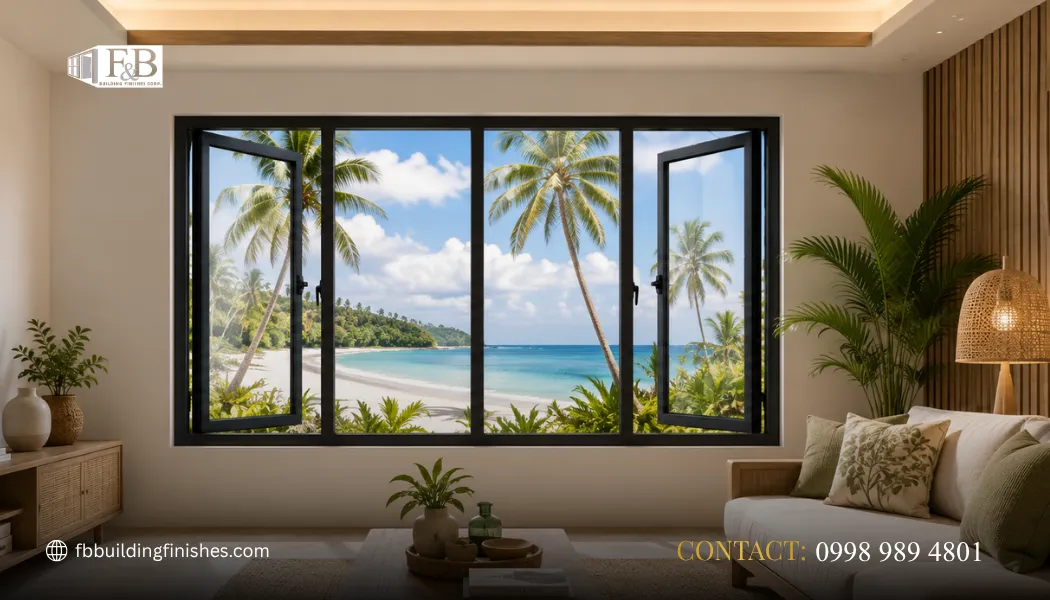
Among the many window systems available today, casement windows have become a popular choice for modern homes, offices, clinics, restaurants, hotels, and other commercial spaces in the Philippines.
Unlike sliding windows, casement windows are attached to the frame by hinges and swing open like a door. This simple operating mechanism allows a large portion of the window opening to remain unobstructed, making casement windows especially useful when ventilation and outdoor views are priorities.
For property owners considering casement windows in the Philippines, however, choosing the right system involves more than selecting a frame color. Aluminum quality, glass type, hardware, seals, installation, and exposure to Philippine weather should all be considered.
What Are Casement Windows?
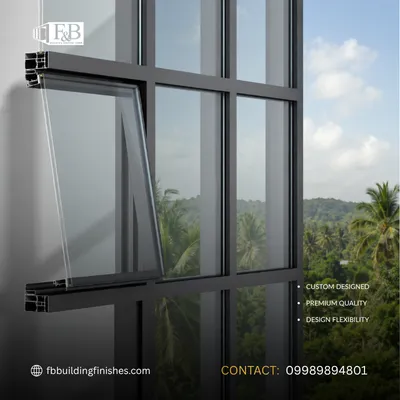
A casement window consists of one or more movable glass panels, called sashes, attached to a window frame by hinges. Depending on the design, the sash may open inward or outward, although outward-opening configurations are frequently used for contemporary buildings.
When fully opened, the sash can capture passing air and direct it indoors. When closed properly, quality seals around the sash help create a tight enclosure.
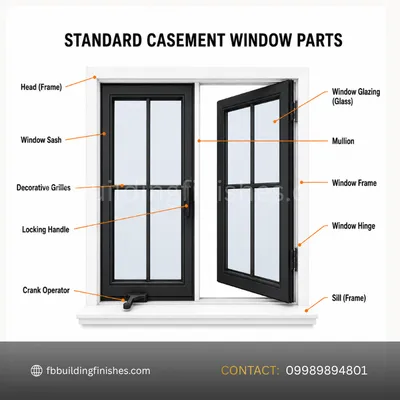
Aluminum casement windows are now widely offered for Philippine residential and commercial applications, particularly where ventilation, modern styling and relatively slim framing are desired.
Why Casement Windows Work Well in the Philippines
The Philippines has a tropical climate characterized by heat, high humidity, heavy rainfall and seasonal strong winds. Windows therefore need to do more than look attractive.
1. Better Ventilation
One of the greatest advantages of casement windows is ventilation.
A sliding window normally leaves part of the opening occupied by another sash. A casement window can open almost entirely, allowing significantly more of the opening to be used for airflow.
The angled sash can also help catch breezes and direct them into the room.
This makes casement windows suitable for:
- Living rooms
- Bedrooms
- Kitchens
- Offices
- Restaurants and cafés
- Clinics
- Resorts
- Low- and mid-rise commercial buildings
Natural ventilation can reduce dependence on mechanical cooling during suitable weather conditions.
Casement vs Sliding Windows
Both systems have useful applications. The better choice depends on the building design.
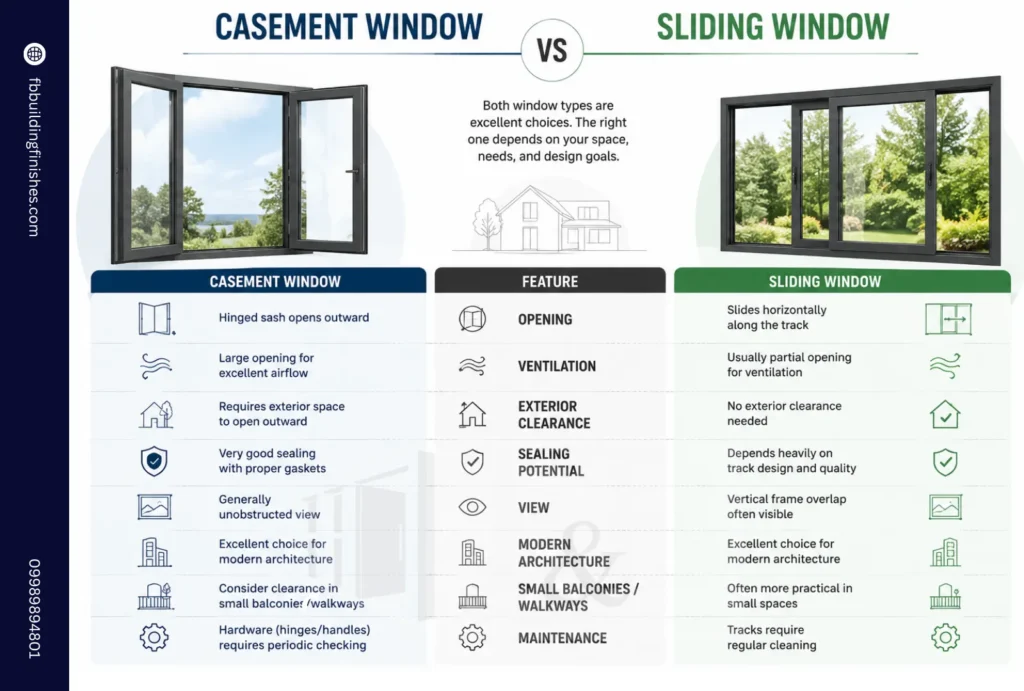
Sliding windows remain useful where an outward-opening sash could interfere with pathways, balconies or neighboring structures.
Casement windows, however, can be the stronger choice where ventilation, sealing and wider views are priorities.
Aluminum Casement Windows
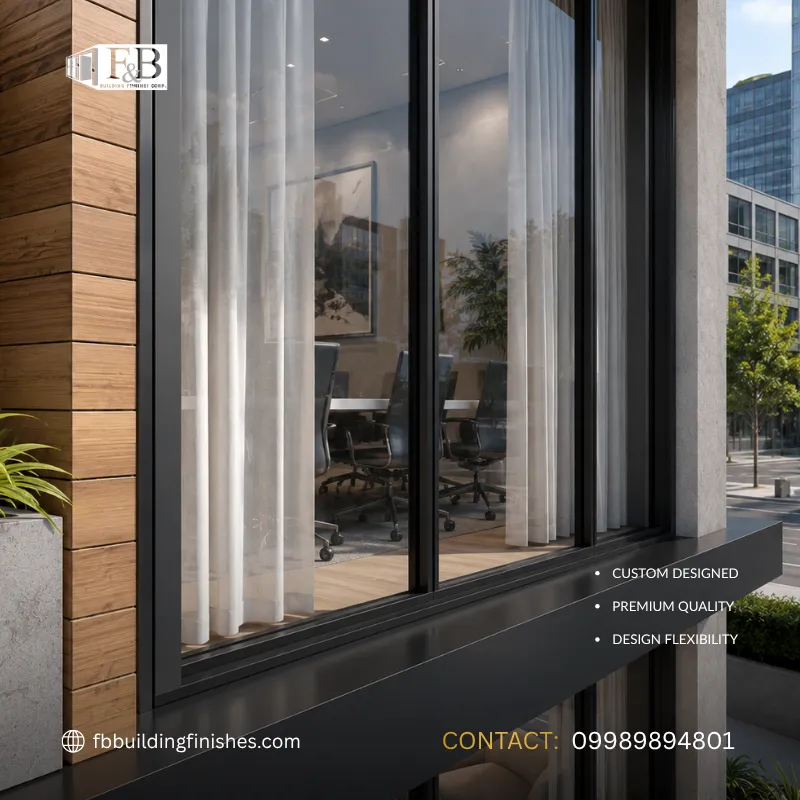
Aluminum is especially appropriate for modern casement systems because it can provide strong framing without requiring extremely bulky profiles.
Unlike untreated steel, aluminum does not rust in the conventional way, although proper finishing, fabrication and maintenance remain important, particularly in humid or coastal environments.
Premium systems may use powder-coated or fluorocarbon-coated finishes in colors such as:
- Matte black
- Dark gray
- Light gray
- Coffee brown
- Matte white
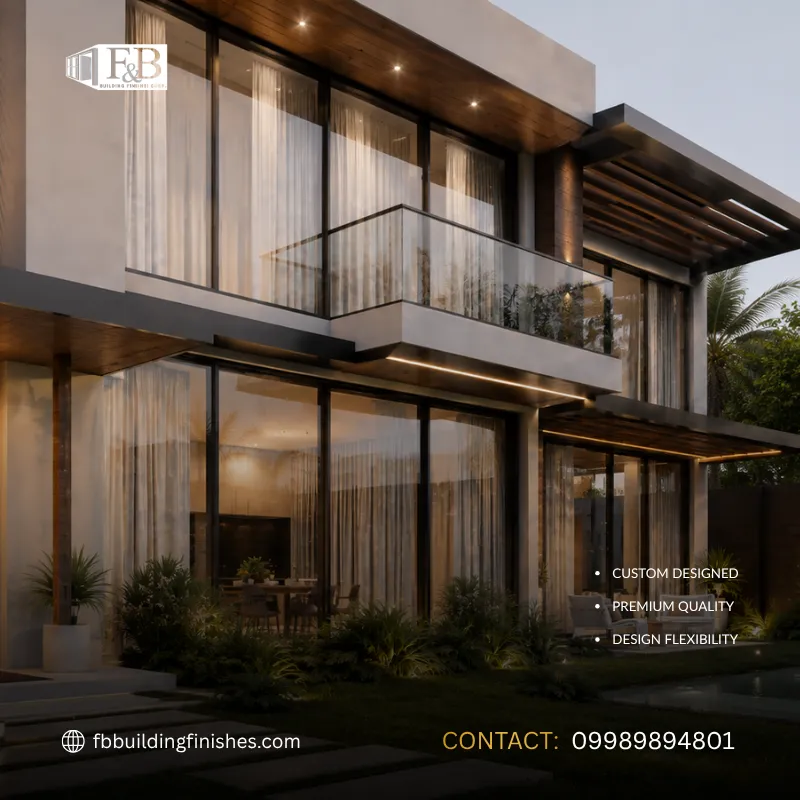
The result is a window system that works particularly well with contemporary Philippine architecture.
Choosing the Right Glass
The window frame is only half of the system. Glass selection matters just as much.
Tempered Glass
Tempered glass undergoes heat treatment that increases its strength and changes how it breaks. It is commonly considered for areas where additional safety and durability are needed.
Laminated Glass
Laminated glass uses an interlayer between glass sheets. When broken, fragments tend to remain attached to the interlayer.
It may be considered where safety, security or acoustic performance is important.
Insulated Glass
Insulated glass units use two or more glass panes separated by a sealed space. They can improve the thermal performance of the window compared with basic single glazing when properly designed.
Low-E Glass
Low-emissivity or Low-E glass has a specialized coating designed to control heat transfer. It can be particularly useful for large glazed areas receiving substantial sunlight.
The Philippine National Building Code also contains requirements governing glass and glazing, particularly glazing exposed to human impact and exterior glass subjected to wind pressure. Window specifications should therefore be selected according to the particular building and application rather than simply using the same glass everywhere.
Standard or Thermal Break?
Not all aluminum window systems have the same thermal performance.
A standard aluminum frame allows heat to travel relatively easily through the metal. A thermal break window incorporates an insulating material separating portions of the interior and exterior aluminum profiles.
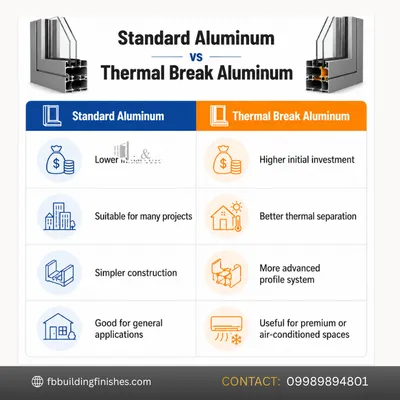
Thermal-break systems become particularly attractive for premium houses, hotels, offices and heavily air-conditioned commercial buildings.
They work best as part of a complete system that also considers the glass, seals, building orientation and installation.
Hardware Matters
A beautiful aluminum profile does not automatically make a good window.
Casement windows rely heavily on their hinges, friction stays, handles, locks and other operating hardware. These components carry the sash repeatedly throughout the life of the window.
Low-quality hardware can eventually result in sagging, difficult operation or poor alignment.
For larger windows especially, the hardware should be matched to the dimensions and weight of the sash.
Multi-point locking systems may also be used in premium casement windows to secure the sash at several points when closed.
Don’t Ignore Gaskets and Seals
One of the least visible parts of a premium window may be one of the most important.
Gaskets help create contact between the sash and frame. Proper compression can improve resistance against unwanted air and water penetration.
High-quality systems often use EPDM-type sealing components because they are designed to remain flexible while exposed to changing environmental conditions.
But even premium seals cannot compensate for incorrect fabrication or poor installation.
Installation Makes the Difference
A premium casement window can still leak if it is installed incorrectly.
The opening should be accurately measured, while the frame needs to be properly positioned, anchored and sealed.
Special attention should be given to:
- Frame alignment
- Anchoring
- Perimeter sealing
- Sill and drainage details
- Flashing where required
- Glass installation
- Hardware adjustment
This is particularly important for Philippine buildings exposed to wind-driven rain.
Casement Windows for Commercial Buildings
Casement windows are not limited to residential projects.
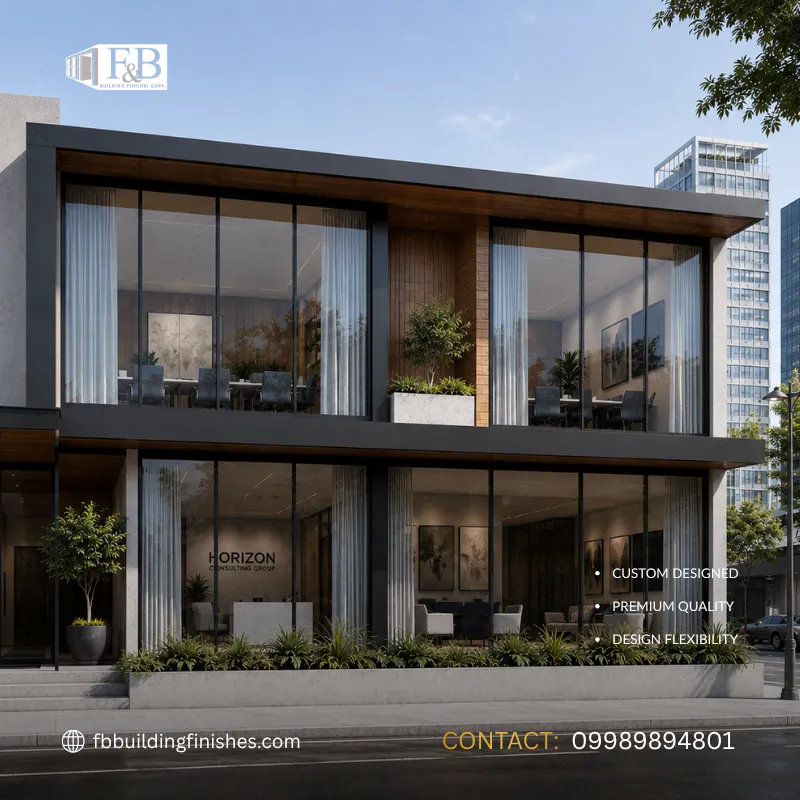
They can complement offices, hospitals, medical clinics, cafés, restaurants, hotels, schools and other commercial environments.
Commercial projects, however, may have different requirements from houses.
Large window dimensions, building height, wind exposure, air-conditioning requirements, acoustic needs and occupancy should all influence the specification.
For large façades, architects may also combine casement windows with fixed glass panels. The fixed sections provide larger uninterrupted views while strategically positioned casement panels provide ventilation.
Are Casement Windows Worth It?
For many Philippine projects, yes—provided the correct system is specified and installed.
A well-designed aluminum casement window can provide a strong combination of ventilation, daylight, modern appearance, weather protection and functionality.
But buyers should avoid choosing a window based solely on price.
Compare the aluminum system, glass specification, hardware, seals, coating, fabrication quality and installation method. A cheaper window that develops alignment problems or leaks may ultimately cost more to repair or replace.
Whether you are building a home, office, restaurant or commercial property, choosing the appropriate casement windows in the Philippines means considering how the entire window will perform in the actual environment.
The best window is not simply the one that looks impressive in a showroom. It is one designed to continue working properly through years of heat, humidity, rain and everyday use.
Frequently Asked Questions About Casement Windows
1. What is a casement window?
A casement window is a window attached to its frame by hinges. It usually opens outward or inward like a door, allowing a large portion of the opening to be used for ventilation.
2. Are casement windows good for Philippine homes?
Yes. Casement windows are well suited to the Philippine climate because they can provide excellent airflow and natural ventilation. When properly designed and installed, they can also offer good resistance to rain and air leakage.
3. Are casement windows better than sliding windows?
Not always. Casement windows generally provide a wider opening and better sealing potential, while sliding windows are often more practical in areas where exterior clearance is limited. The better option depends on the location and design of the building.
4. Do casement windows need exterior clearance?
Outward-opening casement windows do. They should not be installed where the sash could obstruct walkways, balconies, neighboring structures, or other exterior features.
5. Can casement windows be used in commercial buildings?
Yes. Casement windows are commonly used in offices, clinics, restaurants, hotels, schools, and other commercial properties. They can also be combined with fixed glass panels for larger window systems.
6. What type of glass is best for casement windows?
The right glass depends on the application. Options may include tempered, laminated, insulated, or Low-E glass. Factors such as safety, heat exposure, noise, window size, and building location should be considered.
7. Are thermal-break casement windows worth it?
They can be especially useful for air-conditioned homes, offices, hotels, and premium commercial spaces. A thermal break reduces heat transfer through the aluminum frame and can improve the overall thermal performance of the window.
8. Do casement windows leak during heavy rain?
A properly fabricated and installed casement window should provide good weather resistance. However, performance depends on the quality of the frame, gaskets, drainage system, perimeter sealing, hardware, and installation.
9. How long do aluminum casement windows last?
High-quality aluminum casement windows can last for many years with proper installation and maintenance. Periodic checking of hinges, handles, seals, drainage paths, and other hardware can help extend their service life.
10. How do you maintain casement windows?
Clean the glass and aluminum regularly, remove dirt around drainage areas, inspect seals, and check hinges and handles for proper operation. Avoid forcing a sash that has become difficult to open or close, as this may indicate that the hardware needs adjustment.
11. Are casement windows energy efficient?
They can be. Their compression-style sealing can help reduce unwanted air leakage, while thermal-break frames, insulated glass, and Low-E glazing can further improve performance in air-conditioned spaces.
12. How much do casement windows cost in the Philippines?
Prices vary depending on the aluminum profile, window dimensions, glass type, hardware, finish, thermal-break construction, and installation requirements. Custom and premium systems generally cost more than basic aluminum windows.